
Change in Shareholding Pattern: ROC Filing & Compliance Requirements
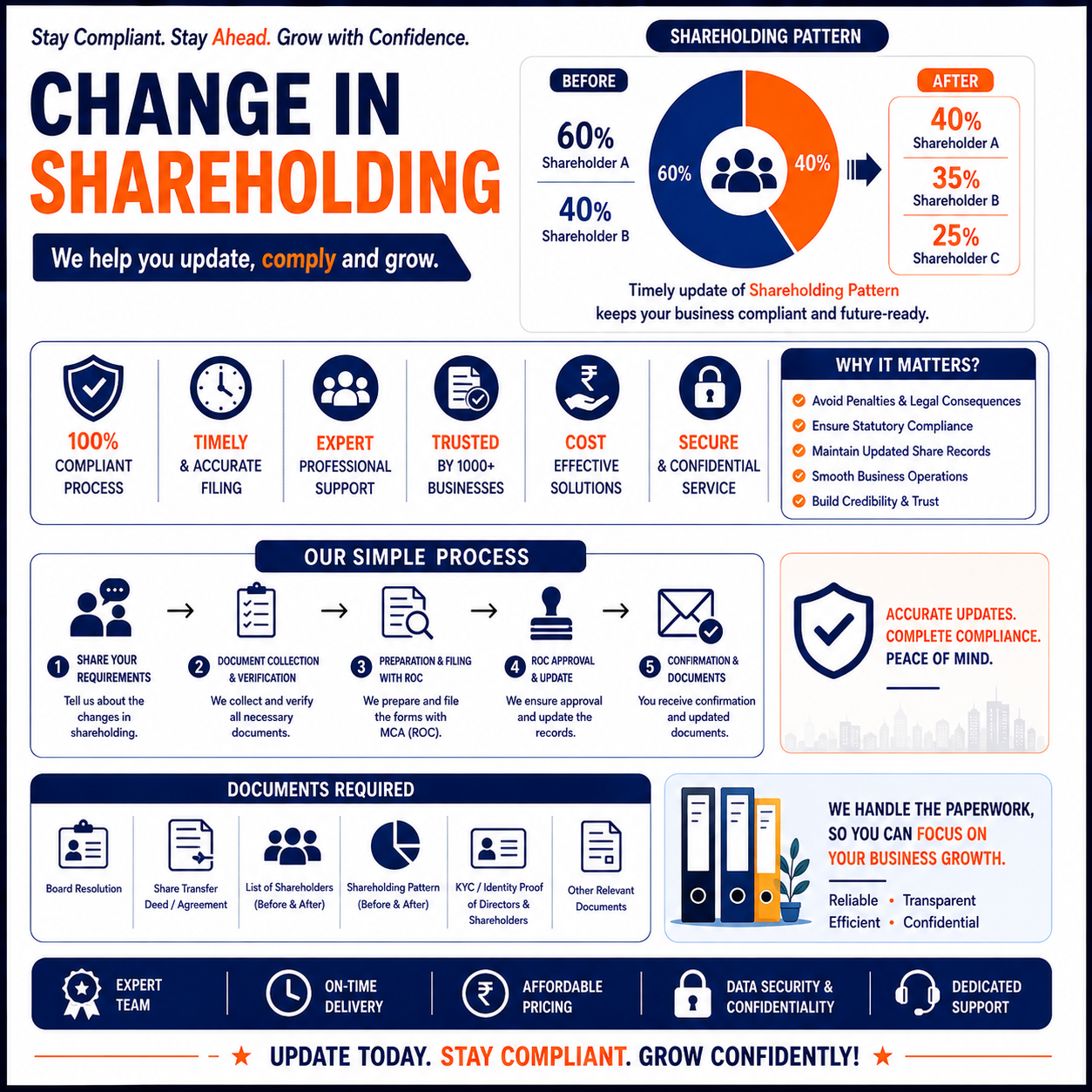
Change in Shareholding Pattern Company Compliance Services
Modifying your company’s shareholding pattern is a major step that requires precise legal handling. Whether you are bringing in new investors, reallocating equity among existing promoters, or transferring shares in a private limited company, these updates define the foundation of your business control. Our team ensures that every modification is documented with absolute accuracy. These shifts are more than just internal updates; they are critical filings that must perfectly reflect your current business reality. We manage these transitions to keep your records transparent, compliant, and audit-ready. We understand that navigating the complexities of shares in a private limited company can feel like an administrative burden, much like the intricate legal processes required when you need to wind up. Our professionals will completely manage your documentation from preparation of resolutions on board, transfer documents and register updates. We are proud to assist you to stay away from compliance stress in order for you to be free to grow your business or plan a proper exit.Our firm protects your business from potential legal bottlenecks through a modern, digital-first approach. We remain committed to maintaining the integrity of your ownership records. Whether you are actively managing shares in a private limited company or preparing for a company wind up, you need a partner who provides the dedicated support to manage these transitions with total confidence, ensuring your legal standing is always in expert hands. Ultimately, our goal is to provide comprehensive oversight that secures your company’s future—whether you are growing, restructuring, or preparing to wind up the company—while streamlining your corporate governance and ensuring your shares in a private limited company are managed with precision.
Change in the pattern of holding means that there are any changes in the pattern of shareholdings in a firm. Changes can be made in shareholding pattern by the transfer of shares, creation of new shares, purchase of shares by the company, and allotment of more shares.
A change in the shareholding pattern may be required in situations such as:
- Transfer of shares between shareholders.
- Induction of new investors.
- Exit of existing shareholders.
- Issue of additional shares.
- Rights issue or preferential allotment.
- Employee Stock Option allotments.
The commonly required documents include:
- Share Transfer Deed.
- Share Purchase Agreement
- Board Resolution.
- Shareholder Resolution
- Existing Share Certificates.
- Identity and address proof of the transferor and transferee.
- PAN cards of the parties involved.
- Updated Register of Members.
Yes.The Board of Directors usually endorses the transfer or allotment of shares by adopting a Board resolution.
ROC filing depends on the nature of the transaction. While some transactions like the issue of new shares involve filing of prescribed forms to the Registrar of Companies, other transactions like transfer of existing shares do not need ROC filing, but need to be registered in the company’s statutory registers.
Yes. Stamp duty may be applicable on the transfer of shares as per the applicable Stamp Act and relevant state or central regulations.
The period varies depending on the nature of the transaction and document availability. In general, the process should take from 7 to 30 working days.
Yes, a Private Limited Company can put restrictions on the transfer of shares in accordance with its Articles of Association.